


Facial Palsy, Congenital, with Ptosis and Velopharyngeal Dysfunction
Patient Information
Characteristics
Background and History
A single 5 generation family has been reported with this inherited nonprogressive condition.
Clinical Correlations
Affected members of the reported family with this nonprogressive condition have a reduced gag reflex and anatomical anomalies of the upper throat resulting in difficulty swallowing. Facial muscles are immobile leading to an expressionless face. Speech is commonly nasal in quality. The upper eyelids appear to droop (ptosis) and it is common for patients to tilt their head back to see under the lids through the nearly closed openings.
There are no other neurologic or skeletal signs. Intellectual abilities are normal.
Genetics
Inheritance
Based on the transmission pattern in the single reported family, this condition is inherited as an autosomal dominant disorder. A gene mutation has been found that is responsible. Parents with this disorder can transmit it directly to their offspring with a 50% probability.
Pedigree
Autosomal dominant
Autosomal dominant disorders require only one mutation for the disease to be expressed. Since an affected parent has two chromosomes, only one of which has the mutant gene, parents can expect that half (50%) of their children will receive that one and inherit the disease. It is common for individuals that inherit the mutation, however, to not have evidence of the disease (nonpenetrance).
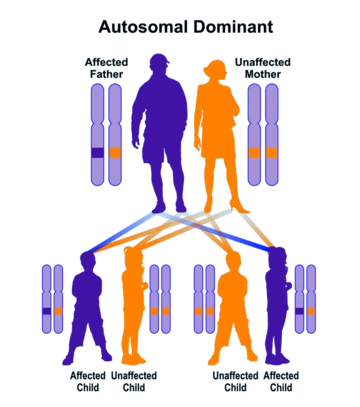
Autosomal dominant inheritance leads to a vertical pattern of transmission
Diagnosis and Prognosis
The immobile face is present at birth and the droopy eyelids and swallowing difficulties may also be apparent at that time. The diminished gag reflex can result in regurgitation and serious lung inflammation (pneumonitis) is a risk. Surgical repairs of the upper throat (pharynx) might improve the nasalized speech and swallowing problems. Lid surgery to lift the drooping upper eyelids can allow for a more normal head position and improved field of vision.
There is no information available on longevity.
Printer Friendly Version: Ctrl/Cmd+P