


OMIM ID:
Takenouchi-Kosaki Syndrome
Alternate Names
Defective Genes
Clinical Characteristics
Ocular Features
The ocular phenotype consists of mild ptosis, synophrys, exotropia, and eversion of the lower eyelids. One of two reported patients was described as having bilateral retinal dysplasia and a falciform retinal detachment in one eye. Visual acuity is significantly impaired.
Systemic Features
Affected individuals may be of normal birth weight but skeletal growth is subnormal and there is general developmental delay. Congenial cardiac anomalies such as persistent ductus arteriosus may be present. Lymphedema has been noted at one year of age and probably persists throughout life. Protein-losing enteropathy secondary to intestinal lymphangiectasia was present in one individual. The same patient had pericardial effusion, hydrothorax, and ascites. Intellectual disability may be severe although there is no evidence of progression. Neurosensory hearing loss has been described in one patient.
Thrombocytopenia is a consistent finding and has been described as early as one year of age. Platelet numbers as low as 52,000/microL have been recorded and appear larger than normal.
Genetics
Inheritance
Both unrelated female patients reported have heterozygous missense mutations in the CDC42 gene (1p36).
Pedigree
Autosomal dominant
Autosomal dominant disorders require only one mutation for the disease to be expressed. Since an affected parent has two chromosomes, only one of which has the mutant gene, parents can expect that half (50%) of their children will receive that one and inherit the disease. It is common for individuals that inherit the mutation, however, to not have evidence of the disease (nonpenetrance).
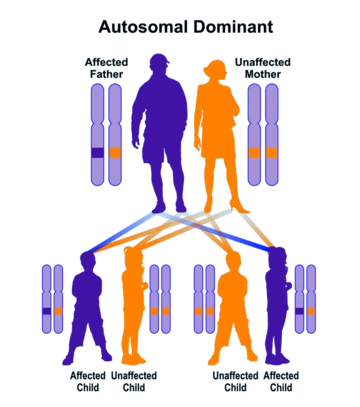
Autosomal dominant inheritance leads to a vertical pattern of transmission