


Clinical Characteristics
Ocular Features
As in many autosomal dominant conditions, there is considerable clinical heterogeneity and even nonpenetrance among individuals. Onset may consist of night blindness in early childhood but many patients are not symptomatic until the 6th or 7th decade of life. The fundus signs are characteristic for retinitis pigmentosa with bone spicule pigmentation clumps, attenuated vessels, optic disc pallor, and peripheral retinal atrophy. Visual fields are peripherally constricted to variable degrees. Patches of chorioretinal “degeneration” and choroidal “sclerosis” have been described. Photophobia, decreased central acuity, and some degree of dyschromatopsia have been reported. Progression of symptoms is highly variable but central acuity is usually affected at some point.
Systemic Features
No systemic abnormalities have been reported.
Genetics
Inheritance
This autosomal dominant type of retinitis pigmentosa seems to result from heterozygous mutations in the HK1 gene (10q22.1). Its phenotype is nonpenetrant in some individuals.
Pedigree
Autosomal dominant
Autosomal dominant disorders require only one mutation for the disease to be expressed. Since an affected parent has two chromosomes, only one of which has the mutant gene, parents can expect that half (50%) of their children will receive that one and inherit the disease. It is common for individuals that inherit the mutation, however, to not have evidence of the disease (nonpenetrance).
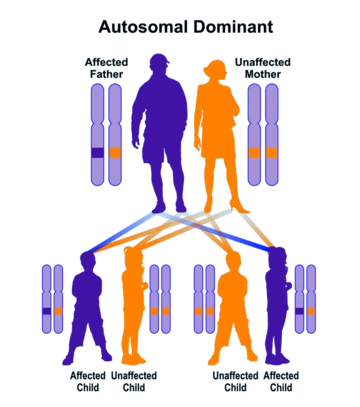
Autosomal dominant inheritance leads to a vertical pattern of transmission