


OMIM ID:
Iridogoniodysgenesis, Type 2
Alternate Names
Defective Genes
Clinical Characteristics
Ocular Features
The iris stroma is hypoplastic resulting in a usually dark chocolate color which can suggest the diagnosis at birth. It may, however, appear slate gray in lightly pigmented individuals. The pupil is usually normal in morphology and location. Glaucoma may detectable in the newborn period but it may also not be diagnosed until the 4th decade or later. It is widely accepted that the anterior chamber angle is anomalous but the architectural and cellular details are lacking.
Systemic Features
No systemic abnormalities have been described.
Genetics
Inheritance
This is an autosomal dominant disorder resulting from heterozygous mutations in the PITX2 gene (4q25).
The same gene may be mutated in ring dermoid of the cornea (180550), Axenfeld-Rieger syndrome 1 (180500), Peters anomaly (604229), and in Axenfeld-Rieger anomaly plus (109120).
Type 1 iridogoniodysgenesis (IRID1) (601631) has many clinical similarities but is caused by DNA alterations in the FOXC1 gene.
Pedigree
Autosomal dominant
Autosomal dominant disorders require only one mutation for the disease to be expressed. Since an affected parent has two chromosomes, only one of which has the mutant gene, parents can expect that half (50%) of their children will receive that one and inherit the disease. It is common for individuals that inherit the mutation, however, to not have evidence of the disease (nonpenetrance).
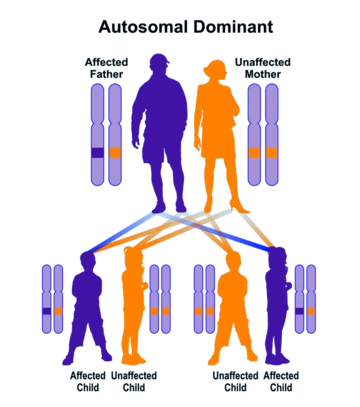
Autosomal dominant inheritance leads to a vertical pattern of transmission