


Clinical Characteristics
Ocular Features
This disorder has some ocular similarities to dermochondrocorneal dystrophy of Francois (221800) such as the presence of cataracts, but differs in the absence of corneal opacities. All patients examined have had glaucoma, uveitis and lens opacities. Gonioscopy in one patient showed multiple anterior synechiae and another patient, an adult, had buphthalmos.
Systemic Features
Skin lesions and stiff, painful joints develop between 4 and 15 years of age. The cutaneous nodules are found primarily on the hands, ears and the upper extremities. These are nonulcerating, tender, violaceous to brown in color, and firm in consistency. Firm subcutaneous plaques apparent only on palpation are also present. No mucosal lesions or xanthelasmata are present. Deforming, symmetric arthritis of the hands, feet and elbows is frequently seen with periarticular bony resorption. The skin of the legs and feet are thick and lichenified. Histology of the skin lesions shows a granulomatous appearance with a chronic inflammatory infiltrate. No multinucleated giant cells are seen.
Genetics
Inheritance
A single family with 4 affected sibs born to an affected male parent has been reported which suggests autosomal dominant inheritance. The mutation, if any, is unknown.
Pedigree
Autosomal dominant
Autosomal dominant disorders require only one mutation for the disease to be expressed. Since an affected parent has two chromosomes, only one of which has the mutant gene, parents can expect that half (50%) of their children will receive that one and inherit the disease. It is common for individuals that inherit the mutation, however, to not have evidence of the disease (nonpenetrance).
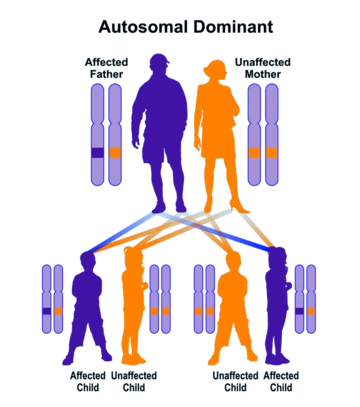
Autosomal dominant inheritance leads to a vertical pattern of transmission