


OMIM ID:
Encephalocraniocutaneous Lipomatosis
Alternate Names
Defective Genes
Clinical Characteristics
Ocular Features
Ocular choristomas of the periocular tissue such as epibulbar dermoids or lipodermoids are seen in 80% of individuals. Some degree of microphthalmia, a ‘hypertrophic’ conjunctiva, and sclerocornea have been reported. The pupils are small and iris hypoplasia with anterior chamber anomalies has been described. The macular reflex can be absent and colobomas of the eyelids (and rarely uveal tract) have been seen.
Systemic Features
Preauricular skin tags may be present. Fatty tissue nevi associated with alopecia as well as frontotemporal or zygomatic subcutaneous fatty lipomas, and focal dermal hypoplasia are seen externally in many patients. Coarctation and/or hypoplasia of the thoracic aorta along with aortic valve anomalies are sometimes present.
Intracranial and intraspinal lipomas are present in over 60% of individuals. Arachnoid cysts with ventricular enlargement, and leptomeningeal angiomatosis are frequently present. Jawbone cysts and tumors are common. The skull and heart may also have lipomas. Seizures and some intellectual disability have been diagnosed in many affected individuals but a third or more have normal intellect. The affected cortex may calcify later in life.
Genetics
Inheritance
ECCL is considered to result from postzygotic activating mutations in the FGFR1 gene (8p11.23) resulting in a mosaic distribution. This may help explain the highly variable and widespread distribution of skin and CNS lesions. A 5-year-old female with an affected father and paternal grandmother have been reported suggesting autosomal dominant inheritance.
Mutations in the same gene have been found in Pfeiffer syndrome (101600).
Pedigree
Autosomal dominant
Autosomal dominant disorders require only one mutation for the disease to be expressed. Since an affected parent has two chromosomes, only one of which has the mutant gene, parents can expect that half (50%) of their children will receive that one and inherit the disease. It is common for individuals that inherit the mutation, however, to not have evidence of the disease (nonpenetrance).
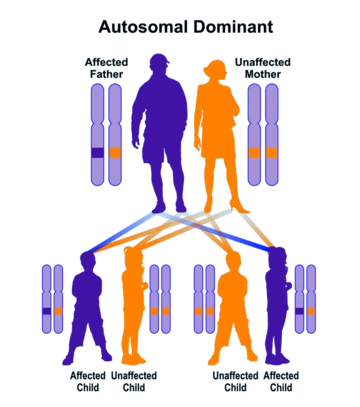
Autosomal dominant inheritance leads to a vertical pattern of transmission