


OMIM ID:
Corneal Dystrophy, Recurrent Epithelial Erosions
Alternate Names
Defective Genes
Clinical Characteristics
Ocular Features
Individuals have the onset of recurrent corneal erosions as a result of as yet unknown disease processes. Onset is in the first decade of life (even in the first year of life) often with some subepithelial haze or blebs while denser centrally located opacities develop with time. Erosions often are precipitated by relatively minor trauma and are often difficult to treat, lasting for up to a week. Fortunately, the erosions become less frequent as patients age and may cease altogether by the fifth decade of life.
Systemic Features
No systemic disease is associated with ERED.
Genetics
Inheritance
The few reported families have all had an autosomal dominant pattern of inheritance. So far no locus or molecular defect has been identified.
The clinical features of this condition are found in other corneal dystrophies and it is likely that at least some of the reported cases may have had other unrecognized corneal conditions.
Pedigree
Autosomal dominant
Autosomal dominant disorders require only one mutation for the disease to be expressed. Since an affected parent has two chromosomes, only one of which has the mutant gene, parents can expect that half (50%) of their children will receive that one and inherit the disease. It is common for individuals that inherit the mutation, however, to not have evidence of the disease (nonpenetrance).
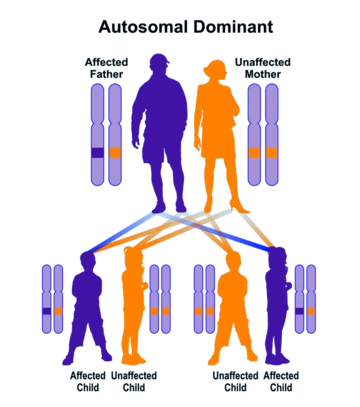
Autosomal dominant inheritance leads to a vertical pattern of transmission