


OMIM ID:
Biemond Syndrome II
Alternate Names
Defective Genes
Clinical Characteristics
Ocular Features
This disorder may belong to the spectrum of Bardet-Biedl syndromes (209900) but is listed separately because of the prominent association of iris colobomata. Retinal dystrophy resembling retinitis pigmentosa is also part of this disorder but the rarity of cases precludes a full description of the phenotype.
Systemic Features
Underdevelopment of the external genitalia is more prominent in males. Obesity, hydrocephalus and mental retardation are also features. Postaxial polydactyly is common. Renal disease does not seem to be part of this disorder.
Genetics
Inheritance
Little is known about the inheritance or genetic defect responsible. Colobomas and polydactyly have been found in relatives of patients with Biemond syndrome suggesting that this may be an autosomal dominant disorder with variable penetrance.
Pedigree
Autosomal dominant
Autosomal dominant disorders require only one mutation for the disease to be expressed. Since an affected parent has two chromosomes, only one of which has the mutant gene, parents can expect that half (50%) of their children will receive that one and inherit the disease. It is common for individuals that inherit the mutation, however, to not have evidence of the disease (nonpenetrance).
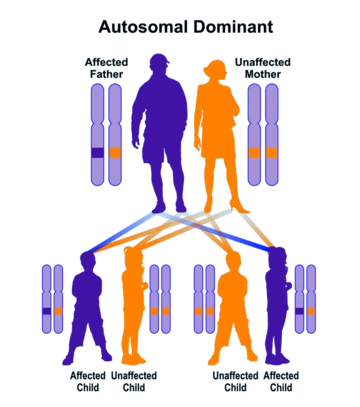
Autosomal dominant inheritance leads to a vertical pattern of transmission