


OMIM ID:
Baraitser-Winter Syndrome 1
Alternate Names
Defective Genes
Clinical Characteristics
Ocular Features
Ptosis (both unilateral and bilateral), hypertelorism, prominent epicanthal folds, and colobomata are common. The iris stroma may be dysplastic and correctopia has been observed. Visual acuity has not been measured.
Systemic Features
Postnatal growth retardation leads to short stature. Microcephaly and morphological aberrations in the brain such as lissencephaly, agenesis of the corpus callosum and pachygyria are present. Seizures and developmental delays are common. Hearing loss is sensorineural in type.
The ears are low-set and the posterior hair line may be low as well. The nasal bridge appears broad and the nose appears short. Male genitalia are often underdeveloped. Bicuspid aortic valves, patent ductus arteriosus, and aortic stenosis have been reported.
Genetics
Inheritance
Heterozygous mutations in the ACTB gene (7p22.1) are responsible for this apparent autosomal dominant syndrome. However, all patients have been sporadic.
This condition is clinically similar to Baraitser-Winter syndrome 2 (614583) which is a unique entity caused by a mutation in ACTG1.
Pedigree
Autosomal dominant
Autosomal dominant disorders require only one mutation for the disease to be expressed. Since an affected parent has two chromosomes, only one of which has the mutant gene, parents can expect that half (50%) of their children will receive that one and inherit the disease. It is common for individuals that inherit the mutation, however, to not have evidence of the disease (nonpenetrance).
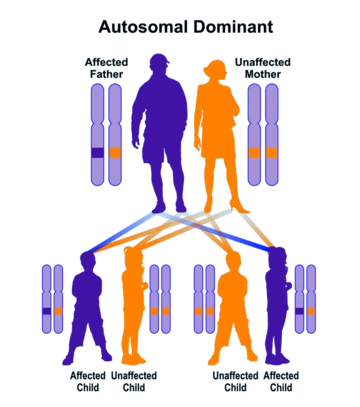
Autosomal dominant inheritance leads to a vertical pattern of transmission