


OMIM ID:
Ataxia with Oculomotor Apraxia 4
Alternate Names
Defective Genes
Clinical Characteristics
Ocular Features
Oculomotor apraxia is usually noted after the ataxia and dystonia are apparent.
Systemic Features
The mean age of first symptoms is 4.3 years with dystonia being the first symptom. Cerebellar ataxia is usually the second symptom to appear. Cognitive impairment is present in most but not all patients with this condition. This can progress to severe dementia in some individuals. Dystonia may become attenuated with time. Peripheral neuropathy with decreased vibration sense and areflexia is often present. Cerebellar atrophy is present in all patients.
Motor difficulties such as weakness and muscle atrophy may lead to loss of independent mobility by the second to third decades.
Genetics
Inheritance
Homozygous or compound heterozygous mutations in the PNKP gene (19q13.33) are responsible for this disorder.
Mutations in this gene have also been associated with an infantile form of epileptic encephalopathy, microcephaly, and developmental delay (613402).
See also Ataxia with Oculomotor Apraxia 1 (208920) with hypoalbuminemia, Ataxia with Oculomotor Apraxia 2 (606002), and Ataxia with Oculomotor Apraxia 3 (615217).
Pedigree
Autosomal dominant
Autosomal dominant disorders require only one mutation for the disease to be expressed. Since an affected parent has two chromosomes, only one of which has the mutant gene, parents can expect that half (50%) of their children will receive that one and inherit the disease. It is common for individuals that inherit the mutation, however, to not have evidence of the disease (nonpenetrance).
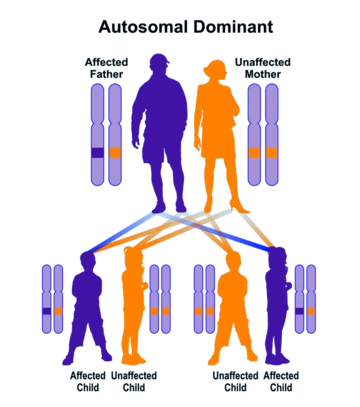
Autosomal dominant inheritance leads to a vertical pattern of transmission