


Chorioretinal dysplasia, microcephaly, and mental retardation
Patient Information
Characteristics
Background and History
This seems to be an inherited disorder that is one of several with a combination of below average head size and eye abnormalities. Like the others, this one is rather ill-defined and further work is required before we can be certain of its uniqueness.
Clinical Correlations
The reduction in head size is highly variable among patients and often minimal. A few patients have been described to have ‘bulging’ foreheads. Many individuals have delays in psychomotor development and some have severe mental retardation.
The eyes may be abnormally small also. The retina has areas of abnormal pigmentation and folds have been seen in some patients. The retina may also have localized detachments. At least one patient among the few families reported had cataracts and glaucoma as well
Genetics
Inheritance
Based on the small number of family pedigrees reported, this disorder seems to be inherited in an autosomal dominant pattern. However, no specific gene mutation has been found to cause this condition. Affected parents may transmit the responsible mutation to half of their children.
Pedigree
Autosomal dominant
Autosomal dominant disorders require only one mutation for the disease to be expressed. Since an affected parent has two chromosomes, only one of which has the mutant gene, parents can expect that half (50%) of their children will receive that one and inherit the disease. It is common for individuals that inherit the mutation, however, to not have evidence of the disease (nonpenetrance).
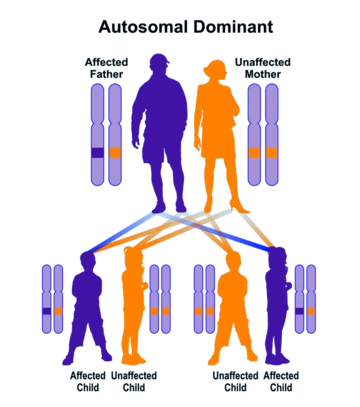
Autosomal dominant inheritance leads to a vertical pattern of transmission
Diagnosis and Prognosis
The diagnosis requires a collaborative effort on the part of ophthalmologists, neurologists, and pediatricians. Prognosis is highly variable depending upon how severe the microcephaly and retinal problems are. Special education and low vision aids could be helpful
Web Resources
Printer Friendly Version: Ctrl/Cmd+P