


Cataracts, Coppock-Like
Patient Information
Characteristics
Background and History
Opacities of the lens in the eye (cataracts) can result from a variety of causes such as infections, trauma, and various systemic diseases. Some like this one are inherited as the result of a mutation in a gene.
Clinical Correlations
These cataracts arise during development and are present at birth. They are often progressive and some patients require lens removal (cataract surgery) in order to see well. There are no other diseases associated. Their only impact is on vision.
Genetics
Inheritance
These cataracts are inherited in an autosomal dominant pattern. Affected parents, both male and female, can expect on average that half of their children will inherit the same kind of lens opacities.
Pedigree
Autosomal dominant
Autosomal dominant disorders require only one mutation for the disease to be expressed. Since an affected parent has two chromosomes, only one of which has the mutant gene, parents can expect that half (50%) of their children will receive that one and inherit the disease. It is common for individuals that inherit the mutation, however, to not have evidence of the disease (nonpenetrance).
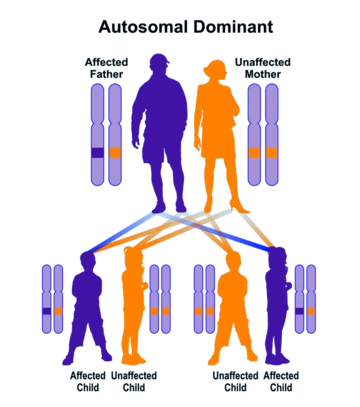
Autosomal dominant inheritance leads to a vertical pattern of transmission
Diagnosis and Prognosis
Cataracts are usually diagnosed by eye doctors based on an examination. If they are dense enough to be visually significant and cause seeing problems, ophthalmologists can surgically remove them.
Web Resources
Printer Friendly Version: Ctrl/Cmd+P