


OMIM ID:
Tenorio Syndrome
Alternate Names
Defective Genes
Clinical Characteristics
Ocular Features
The eyebrows appear bushy. Inflammation of the limbus and keratoconjunctivitis sicca are often present and reported to resemble Sjögren syndrome.
Systemic Features
Infants appear large at birth with a large forehead and macrocephaly. Birth weight, length, and head circumference are usually above the 97th percentile. The mandible appears large and the lips are full and ‘fleshy’. Dentition is delayed. Recurrent stomatitis and gastroesophageal reflux have been noted. Closure of the fontanels is delayed. Hypotonia and hyperflexible joints can be a feature.
Multiple brain anomalies have been described including cortical atrophy, dilated and asymmetrical ventricles, and mild hydrocephalus. Psychomotor development and milestones are delayed. Intellectual disabilities, syncope, hypoglycemia, seizures, apneic episodes, mood anomalies, abnormal gait, and general clumsiness may be present. There was considerable clinical variation among the six reported patients.
Genetics
Inheritance
Heterozygous mutations in RNF125 (18q12.1) are responsible for this syndrome.
Pedigree
Autosomal dominant
Autosomal dominant disorders require only one mutation for the disease to be expressed. Since an affected parent has two chromosomes, only one of which has the mutant gene, parents can expect that half (50%) of their children will receive that one and inherit the disease. It is common for individuals that inherit the mutation, however, to not have evidence of the disease (nonpenetrance).
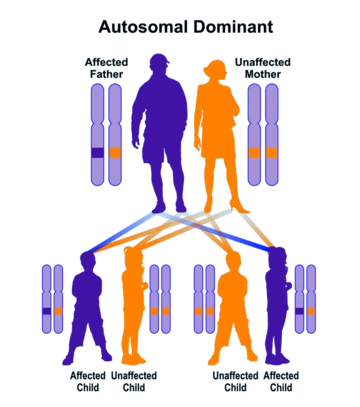
Autosomal dominant inheritance leads to a vertical pattern of transmission