


OMIM ID:
Spinocerebellar Ataxia 37
Alternate Names
Defective Genes
Clinical Characteristics
Ocular Features
Abnormal ocular movements are common, beginning with dysmetric vertical saccades and irregularities of vertical pursuit, with later development of irregular horizontal tracking movements. Nystagmus is sometimes present.
Two otherwise asymptomatic individuals with dysmetric vertical saccades and irregular vertical pursuit movements had normal horizontal pursuit movements at the ages of 32 and 40 years and were found to have the SCA37 haplotype.
Systemic Features
The mean age of onset in is about 50 years with signs of dysarthria and a clumsy gait. Other more variable findings include truncal ataxia, dysmetria, and sometimes dysphagia. Slow progression of signs may lead to eventual wheelchair dependence within one or two decades of disease onset. Brain imaging reveals cerebellar atrophy with sparing of the brainstem.
Genetics
Inheritance
Heterozygous mutations in the DAB1 gene (1p32.2) are responsible for this disorder. This disorder of adult onset has been described in several families living on the Iberian peninsula.
Pedigree
Autosomal dominant
Autosomal dominant disorders require only one mutation for the disease to be expressed. Since an affected parent has two chromosomes, only one of which has the mutant gene, parents can expect that half (50%) of their children will receive that one and inherit the disease. It is common for individuals that inherit the mutation, however, to not have evidence of the disease (nonpenetrance).
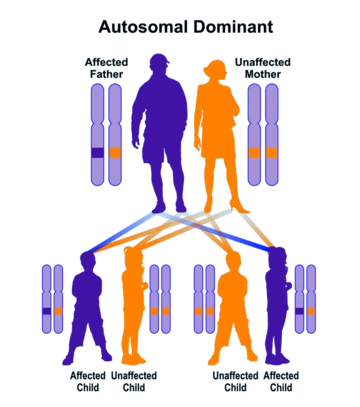
Autosomal dominant inheritance leads to a vertical pattern of transmission