


OMIM ID:
Optic Atrophy, Ophthalmoplegia, Myopathy, and Neuropathy
Alternate Names
Defective Genes
Clinical Characteristics
Ocular Features
Visual symptoms have an insidious onset in childhood with vision loss and progressive external ophthalmoplegia. Ptosis may be evident later. The optic atrophy is progressive. ERG abnormalities have been reported but no pigmentary retinopathy has been seen. Myopia is sometimes present.
Systemic Features
The extraocular signs and symptoms are variable and generally have a later onset. Some patients have an early onset of sensorineural hearing loss. Muscle cramps and hyperreflexia may occur with clonus and a spastic gait. Ataxia seems to be common. The neurological phenotype has been likened to muscular sclerosis, Kearns-Sayre syndrome, and spastic paraplegia. Muscle biopsies show variable-sized and atrophic fibers.
Genetics
Inheritance
This is generally considered an autosomal dominant disorder secondary to mutations in the OPA1 gene. It is allelic to optic atrophy 1 (165500) but may also be the same condition since the p.Arg247His mutation has been found in patients with both disorders. This syndromic form of optic atrophy may also result from biallelic mutations in OPA1 in which the clinical disease is more severe and earlier in onset.
Pedigree
Autosomal dominant
Autosomal dominant disorders require only one mutation for the disease to be expressed. Since an affected parent has two chromosomes, only one of which has the mutant gene, parents can expect that half (50%) of their children will receive that one and inherit the disease. It is common for individuals that inherit the mutation, however, to not have evidence of the disease (nonpenetrance).
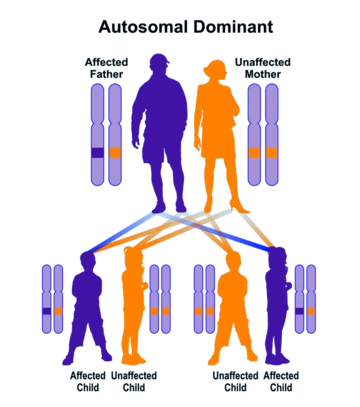
Autosomal dominant inheritance leads to a vertical pattern of transmission