


OMIM ID:
Oculopharyngodistal Myopathy
Alternate Names
Defective Genes
Clinical Characteristics
Ocular Features
Progressive ptosis, which may be asymmetric, is an early sign. Extraocular palsy occurs as well.
Systemic Features
The mean age of onset of this progressive disease is 22 years. Pharyngeal and distal limb muscles seem to be primarily involved. Weakness in masseter, facial, and bulbar muscles have been observed but no muscle group seems to be spared. Atrophy of facial muscles is common and may be pronounced. There is considerable variability in expression, particularly in the degree of limb weakness which often appears by the fifth decade. Swallowing difficulties can be severe. Respiratory weakness may be evident relatively early, even while patients are still ambulatory. Loss of ambulation most commonly occurs by the third or fourth decade after the onset of first symptoms. Serum creatine kinase levels are mildly elevated and histologic changes show chronic myopathic changes with rimmed vacuole formation. No changes have been found in the central or peripheral nervous system.
Genetics
Inheritance
The causative mutation has not been identified but mutations causing other forms of hereditary myopathy have been ruled out. Most families are consistent with autosomal dominant inheritance but the pattern in at least one family has suggested a recessive pattern indicating genetic heterogeneity.
Pedigree
Autosomal dominant
Autosomal dominant disorders require only one mutation for the disease to be expressed. Since an affected parent has two chromosomes, only one of which has the mutant gene, parents can expect that half (50%) of their children will receive that one and inherit the disease. It is common for individuals that inherit the mutation, however, to not have evidence of the disease (nonpenetrance).
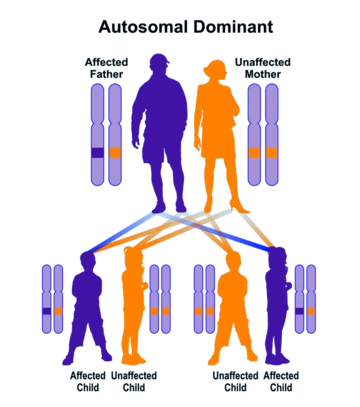
Autosomal dominant inheritance leads to a vertical pattern of transmission