


OMIM ID:
Microphthalmia, Syndromic 5
Alternate Names
Defective Genes
Clinical Characteristics
Ocular Features
One or both eyes may be small, sometimes resembling clinical anophthalmia. Other ocular anomalies such as coloboma, microcornea, cataracts, and hypoplasia or agenesis of the optic nerve have been reported.
A pigmentary retinopathy has been described. The retinal vessels are often attenuated and sometimes sparse. The optic nerves and chiasm are frequently absent or hypoplastic as seen on the MRI. ERG and VEP responses are inconsistent but are generally abnormal indicating photoreceptor malfunction.
Systemic Features
Patients have a variety of systemic abnormalities including pituitary dysfunction, joint laxity, hypotonia, agenesis of the corpus callosum, and seizures. Hypothyroidism and deficiencies of growth hormone, gonadotropins, and cortisol are present in some patients. Developmental delay and cognitive impairment are frequently present but mental functioning is normal in some patients. The genitalia of males are often underdeveloped. Patients are often short in stature.
Genetics
Inheritance
Pedigree
Autosomal dominant
Autosomal dominant disorders require only one mutation for the disease to be expressed. Since an affected parent has two chromosomes, only one of which has the mutant gene, parents can expect that half (50%) of their children will receive that one and inherit the disease. It is common for individuals that inherit the mutation, however, to not have evidence of the disease (nonpenetrance).
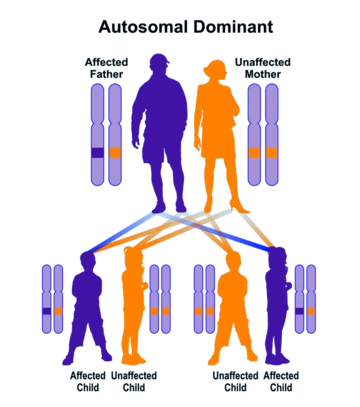
Autosomal dominant inheritance leads to a vertical pattern of transmission