


OMIM ID:
Microphthalmia, Syndromic 3
Alternate Names
Defective Genes
Clinical Characteristics
Ocular Features
Microphthalmia or clinical anophthalmia is the major ocular malformation in this disorder but optic nerve hypoplasia or even aplasia may also be present. Colobomas and congenital cataracts may be seen.
Systemic Features
Esophageal atresia and sometimes tracheoesophageal fistula sometimes coexist. The ears can be low-set and malformed and sensorineural hearing loss is often present. Facial palsy has been reported. The penis may be small and combined with cryptorchidism while physical growth retardation is common. Other less common malformations include cleft palate, vertebral anomalies, cardiac anomalies, body asymmetry, and microcephaly. A few patients have had radiologically evident CNS malformations such as dilated ventricles, hippocampal hypoplasia, abnormal white matter, and holoprosencephaly. However, intellectual development and function have been normal in other patients.
Genetics
Inheritance
This is an autosomal dominant disorder secondary to heterozygous mutations in the SOX2 gene (3q26.33). Chromosomal aberrations involving this region of chromosome 3 have also been found.
Pedigree
Autosomal dominant
Autosomal dominant disorders require only one mutation for the disease to be expressed. Since an affected parent has two chromosomes, only one of which has the mutant gene, parents can expect that half (50%) of their children will receive that one and inherit the disease. It is common for individuals that inherit the mutation, however, to not have evidence of the disease (nonpenetrance).
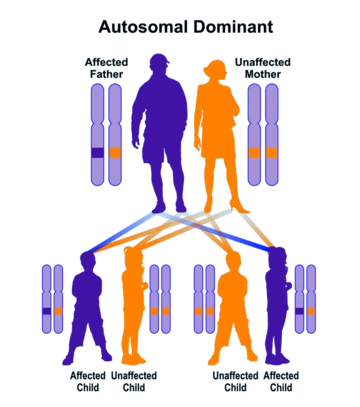
Autosomal dominant inheritance leads to a vertical pattern of transmission