


OMIM ID:
Mental Retardation, AD 53
Alternate Names
Defective Genes
Clinical Characteristics
Ocular Features
Dysmorphism of periocular structures includes downward slanting lid fissures, hypertelorism, and epicanthal folds. Evidence for visual problems comes from visual tracking difficulties in some individuals. Strabismus is present in a minority of patients.
Systemic Features
Delayed global development, cognitive impairment, and intellectual disability are major features of this form of mental retardation. Hypotonia is present early. Severe delays in onset of speech and walking are found in all patients and never develop in many individuals. Behavior problems include, anxiety, hyperactivity, aggression, and autistic traits. Feeding problems and breathing irregularities have been reported. Seizures occur in some patients.
Brain MRIs are generally normal although corpus callosum anomalies are sometimes identified.
Genetics
Inheritance
Heterozygous mutations in the CAMK2A gene (5q32) have been found in individuals with this disorder.
Pedigree
Autosomal dominant
Autosomal dominant disorders require only one mutation for the disease to be expressed. Since an affected parent has two chromosomes, only one of which has the mutant gene, parents can expect that half (50%) of their children will receive that one and inherit the disease. It is common for individuals that inherit the mutation, however, to not have evidence of the disease (nonpenetrance).
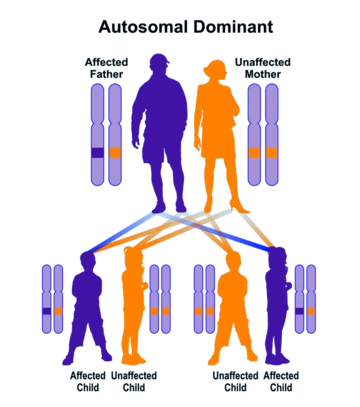
Autosomal dominant inheritance leads to a vertical pattern of transmission