


OMIM ID:
Mental Retardation, AD 31
Alternate Names
Defective Genes
Clinical Characteristics
Ocular Features
A variety of ocular dysmorphisms have been described in this disorder including up-slanting lid fissures, epicanthal folds, hypertelorism, and telecanthus. Ptosis was described in 1 patient. Strabismus, nystagmus, and disconjugate gaze have been observed. Visual acuity has not been reported but “variable visual impairment” has been described. One patient was considered to have cortical visual impairment.
Systemic Features
Neonatal hypotonia and feeding difficulties are among the first signs along with seizure-like activity (50%) including infantile spasms. EEG anomalies are present in the majority of individuals. Gastroscopy tubes may be required in a significant minority of patients. Hypotonic or myopathic facies is common. Apneic episodes may be seen in the neonatal period and most infants have respiratory difficulties in the first year of life which may improve during this period. Learning difficulties and features of autism are common. Some patients are unable to walk while others have an ataxic or broad-based gait. Speech may be absent or severely limited. The forehead is prominent while the hard palate is usually highly vaulted.
Brain MRIs may show delayed myelination but such scans have been described as normal in other individuals. Enlarged ventricles, a thin corpus callosum, and periventricular white matter changes may also be present. Neuropathologic studies have revealed chronic inflammatory changes around the arterioles of deep while matter.
Genetics
Inheritance
Heterozygous mutations in the PURA gene (5q31) have been identified in this disorder.
Pedigree
Autosomal dominant
Autosomal dominant disorders require only one mutation for the disease to be expressed. Since an affected parent has two chromosomes, only one of which has the mutant gene, parents can expect that half (50%) of their children will receive that one and inherit the disease. It is common for individuals that inherit the mutation, however, to not have evidence of the disease (nonpenetrance).
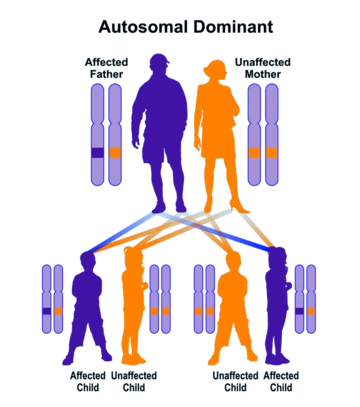
Autosomal dominant inheritance leads to a vertical pattern of transmission