


OMIM ID:
Macular Dystrophy, Occult
Alternate Names
Defective Genes
Clinical Characteristics
Ocular Features
There is considerable clinical heterogeneity in this disorder. Reduced vision may cause symptoms beginning during adolescence but some individuals may have good vision until the 6th decade or even later. Even those who complain of changes in acuity may still have 20/20 to 20/25 vision but it may also be much worse, in the range of count fingers. There can be considerable asymmetry in acuity between the two eyes but there is little known about the rate of vision loss. Mild dyschromatopsia is often present with deficits in both red-green and red-green discrimination but total color blindness has also been reported. Full field ERGs usually show no rod or cone deficits. However, multifocal ERG changes suggest dysfunction of the cones in the macula. Spectral-domain optical coherence tomography can reveal disruptive changes at the photoreceptor inner/outer segment line and in cone outer segment tips. Disruption of the external limiting membrane and decreased foveal thickness have also been reported. The retina appears normal to clinical examination even in advanced stages of disease and fluorescein angiography likewise shows no abnormalities.
Systemic Features
No systemic disease has been repoted in this condition.
Genetics
Inheritance
This is an autosomal dominant condition resulting from heterozygous mutations in RP1L1 (8p23.1). A significant number of sporadic cases occur, however, which suggests new mutations are relatively common or that there is etiologic heterogeneity.
Pedigree
Autosomal dominant
Autosomal dominant disorders require only one mutation for the disease to be expressed. Since an affected parent has two chromosomes, only one of which has the mutant gene, parents can expect that half (50%) of their children will receive that one and inherit the disease. It is common for individuals that inherit the mutation, however, to not have evidence of the disease (nonpenetrance).
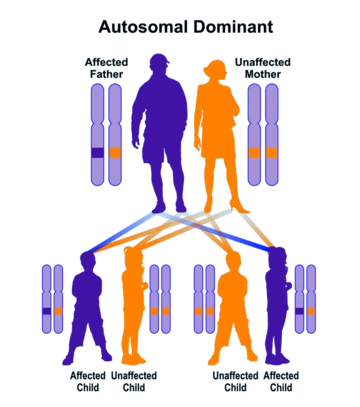
Autosomal dominant inheritance leads to a vertical pattern of transmission