


OMIM ID:
Familial Exudative Vitreoretinopathy, EVR7
Alternate Names
Defective Genes
Clinical Characteristics
Ocular Features
The ocular features are primarily limited to the posterior chamber where there are areas of retinal avascularity, exudation, retinal holes, and detachments. Areas of degeneration and pigmentary retinopathy may be present. Vascular proliferation may be part of the process with vitreous traction and folds. Progression of retinal damage is highly variable and surgical outcomes are unpredictable. Long term vision outcomes are sometimes as good as 20/40 but in many eyes NLP or hand motion vision is the end result.
Secondary changes in the anterior chamber and cornea from repeated surgeries may lead to glaucoma, cataracts, and corneal decompensation.
Systemic Features
There are no consistent systemic abnormalities.
Genetics
Inheritance
Missense and nonsense heterozygous mutations in the CTNNB1 gene (3p22.1) segregate with this autosomal dominant condition found in two families of Japanese origin. A Chinese 3-year-old with FEVR having a single BP insertion in the CTNNB1 gene also had global developmental delay and dysmorphic facies.
Pedigree
Autosomal dominant
Autosomal dominant disorders require only one mutation for the disease to be expressed. Since an affected parent has two chromosomes, only one of which has the mutant gene, parents can expect that half (50%) of their children will receive that one and inherit the disease. It is common for individuals that inherit the mutation, however, to not have evidence of the disease (nonpenetrance).
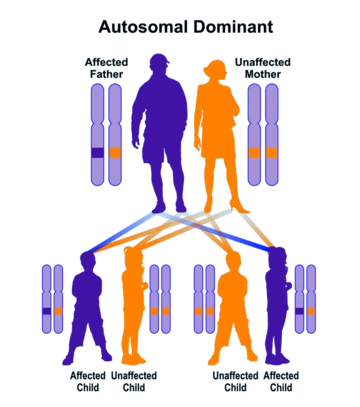
Autosomal dominant inheritance leads to a vertical pattern of transmission