


OMIM ID:
Familial Exudative Vitreoretinopathy, EVR5
Alternate Names
Defective Genes
Clinical Characteristics
Ocular Features
The clinical picture is highly heterogeneous. Abnormal peripheral vascularization of the retina is generally evident and most individuals have retinal exudates. The amount of exudation is dependent to some extent upon age. Fluorescein angiography may demonstrate incomplete vascularization of the peripheral retina. The ocular phenotype can resemble retinal dysplasia. Occasional infants can have severe retinal disease and may be considered blind but many individuals have minimal disease and retain good vision into adulthood. Unfortunately, traction retinal detachments may develop at any time and are responsible for blindness in some patients.
Cataracts are sometimes present. Ectopic pupils, lack of well-defined pupillary collarettes, remnants of the fetal vascular stalk, and shallowing of the anterior chamber have been noted in several patients. Microphthalmia and corneal opacities may also be present. Horizontal nystagmus can be seen in severely affected babies before one month of age.
Systemic Features
No systemic features have been reported.
Genetics
Inheritance
This disorder can be inherited in an autosomal dominant pattern as the result of heterozygous mutations in the TSPAN12 gene (7q31.31). However, individuals with more severe disease may have homozygous mutations in this gene.
Pedigree
Autosomal dominant
Autosomal dominant disorders require only one mutation for the disease to be expressed. Since an affected parent has two chromosomes, only one of which has the mutant gene, parents can expect that half (50%) of their children will receive that one and inherit the disease. It is common for individuals that inherit the mutation, however, to not have evidence of the disease (nonpenetrance).
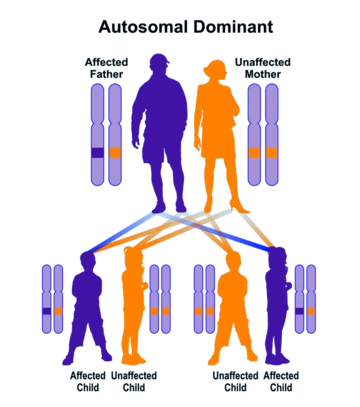
Autosomal dominant inheritance leads to a vertical pattern of transmission
Autosomal recessive
In order for autosomal recessive disorders to be expressed, offspring generally must inherit two mutations, one from each carrier parent. Carriers with only one mutation, such as the parents, do not have clinical disease. Note that carrier parents can expect that 1 in 4 children (25%) will inherit both mutations and have the disorder, 2 in 4 children (50%) will be carriers like their parents, while 1 in 4 children (25%) inherit neither mutation.

In order for autosomal recessive disorders to be expressed, offspring generally must inherit two mutations, one from each carrier parent. Carriers with only one mutation, such as the parents, do not have clinical disease. Note that carrier parents can expect that 1 in 4 children (25%) will inherit both mutations and have the disorder, 2 in 4 children (50%) will be carriers like their parents, while 1 in 4 children (25%) inherit neither mutation.