


OMIM ID:
Epileptic Encephalopathy, Infantile or Early Childhood 2
Alternate Names
Defective Genes
Clinical Characteristics
Ocular Features
Cortical visual impairment or blindness was reported in 3 0f 11 patients.
Systemic Features
The hallmark signs of this disorder consist of developmental delay and epilepsy. Onset of seizures occur in the first decade of life, between birth and 6 years, and consist of a variety of types including focal, multifocal, generalized tonic-clonic, febrile, myoclonic, and atonic. EEG patterns range from normal, to slow waves, spike waves, and burst suppression patterns. Seizures may respond to treatment in some individuals whereas others are unresponsive.
Microcephaly, both acquired and congenital, was seen in 7 individuals. MRI scans are usually normal but some patients have nonspecific white matter abnormalities. Developmental milestones are seldom achieved but some patients are able to walk and speak with difficulty. Hypotonia, spasticity, and dyskinesias such as myoclonia, dystonia and ataxia are variably present.
Genetics
Inheritance
Heterozygous missense mutations in the GABRB2 gene (5q34) are responsible for this syndrome.
Pedigree
Autosomal dominant
Autosomal dominant disorders require only one mutation for the disease to be expressed. Since an affected parent has two chromosomes, only one of which has the mutant gene, parents can expect that half (50%) of their children will receive that one and inherit the disease. It is common for individuals that inherit the mutation, however, to not have evidence of the disease (nonpenetrance).
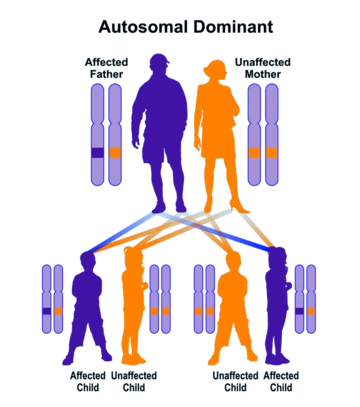
Autosomal dominant inheritance leads to a vertical pattern of transmission