


OMIM ID:
Epileptic Encephalopathy, Early Infantile 58
Alternate Names
Defective Genes
Clinical Characteristics
Ocular Features
Infants are noted early to have poor fixation and visual following of targets. Optic nerve hypoplasia is evident on brain MRIs.
Systemic Features
Epilepsy and development delay are hallmarks of this condition. The seizures are of multiple types and have their onset in the first year of life. The EEG often shows diffuse slowing, multifocal spikes and hypsarrhythmia. These are often difficult to control. Severe intellectual disability is usually present. Feeding difficulties are evident early and slow growth is common. Hypotonia is common but hyperreflexia and spasticity are also reported.
Brain MRIs show delayed or reduced myelination. Acquired microcephaly is often seen.
Genetics
Inheritance
De novo heterozygous mutations in the NTRK2 gene (9p21.33) have been found in 4 unrelated individuals.
Pedigree
Autosomal dominant
Autosomal dominant disorders require only one mutation for the disease to be expressed. Since an affected parent has two chromosomes, only one of which has the mutant gene, parents can expect that half (50%) of their children will receive that one and inherit the disease. It is common for individuals that inherit the mutation, however, to not have evidence of the disease (nonpenetrance).
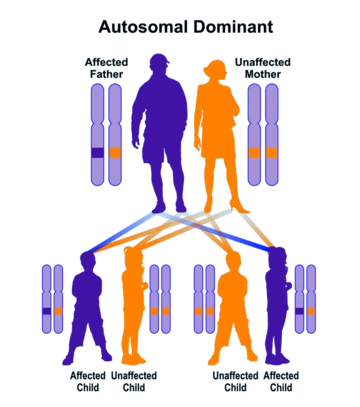
Autosomal dominant inheritance leads to a vertical pattern of transmission