


OMIM ID:
Epileptic Encephalopathy, Early Infantile 47
Alternate Names
Defective Genes
Clinical Characteristics
Ocular Features
The fundus is normal early but optic atrophy with narrowed vessels develops eventually. Cerebral visual impairment has been described. VEPs were normal at 4 months of age in one patient.
Systemic Features
Tonic seizures have their onset in the first month of life. These become refractory as documented by the EEG which shows severe background slowing, multifocal origins, and hypsarrhythmia. Psychomotor development is severely delayed and accompanied by profound intellectual disability. The two reported children were unable to stand and never developed speech. Feeding difficulties requires tube feeding. Microcephaly eventually develops along with axial hypotonia and limb ataxia.
Brain MRI was normal at 5 months of age in one individual but at 6 years old showed cerebellar atrophy. Her younger male sibling at 2 months of age had a normal MRI but cerebellar atrophy was present at 3 years of age. He died at 3.5 years while his older sib died at age 7 years.
Genetics
Inheritance
Heterozygous mutations in the FGF12 gene (3q28-q29) are responsible for this condition. One family with 2 affected children has been reported but neither parent carried the mutation in somatic cells suggesting germline mosaicism.
For autosomal recessive forms of early onset epileptic encephalopathy in this database see Epileptic Encephalopathy, Early Infantile 28 (616211) and Epileptic Encephalopathy, Early Infantile 48 (617276).
Pedigree
Autosomal dominant
Autosomal dominant disorders require only one mutation for the disease to be expressed. Since an affected parent has two chromosomes, only one of which has the mutant gene, parents can expect that half (50%) of their children will receive that one and inherit the disease. It is common for individuals that inherit the mutation, however, to not have evidence of the disease (nonpenetrance).
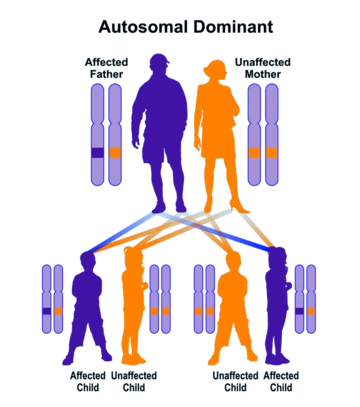
Autosomal dominant inheritance leads to a vertical pattern of transmission