


OMIM ID:
Coloboma of the Optic Nerve
Alternate Names
Defective Genes
Clinical Characteristics
Ocular Features
Isolated colobomas of the optic nerve in the absence of other malformations may occur unilaterally or bilaterally. The optic nerve cups are often huge and may have residual glial tissue in them. Serous detachments of the macula are frequently observed and the risk for extensive retinal detachments is high. Microphthalmos with a cyst (6% of eyes), simple microphthalmos (39% of eyes), and microcornea (84% of eyes) are frequently associated. The visual prognosis is poor when these occur in combination with an optic nerve coloboma (less than 20/400 acuity in 67% of eyes). Isolated optic nerve colobomas without other malformations have the best vision (only 7% have acuity of less than 20/400). Retinal vessels are anomalous as well. They are often increased in number and have a generally straight course in the peripapillary region.
It has been argued that the morning glory disc anomaly may be an expression of this syndrome but this remains to be established.
Systemic Features
No systemic disease is present.
Genetics
Inheritance
This malformation frequently follows an autosomal dominant pattern of transmission secondary to a mutation in the PAX6 gene.
The PAX6 gene impacts DNA transcription and mutations are therefore often associated with a variety of ocular malformations, including uveal colobomas and various forms of anterior chamber dysgenesis.
Optic nerve dysplasia resembling optic pits or the morning glory disc anomaly is a feature of the papillorenal syndrome (120330) but this condition is caused by mutations in the PAX2 gene.
Pedigree
Autosomal dominant
Autosomal dominant disorders require only one mutation for the disease to be expressed. Since an affected parent has two chromosomes, only one of which has the mutant gene, parents can expect that half (50%) of their children will receive that one and inherit the disease. It is common for individuals that inherit the mutation, however, to not have evidence of the disease (nonpenetrance).
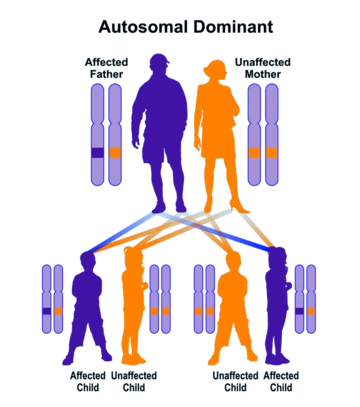
Autosomal dominant inheritance leads to a vertical pattern of transmission