


OMIM ID:
Bosma Arhinia Microphthalmia Syndrome
Alternate Names
Defective Genes
Clinical Characteristics
Ocular Features
Microphthalmia or clinical anophthalmia are usually present. Iris colobomas are frequent features. Occluded or absent nasolacrimal ducts have been reported.
Systemic Features
Arhina with anosmia is the most striking feature but it is usually accompanied by midface hypoplasia, a highly arched (or cleft) palate, and preauricular pits. The nasal bones along with the cribriform plate, and other septal structures may be missing. Maxillary and paranasal sinuses, together with the olfactory bulbs are often absent. Intelligence is usually normal.
Choanal atresia is often present. Hypogonadotropic hypogonadism with micropenis and cryptorchidism is an important feature in males. Females may experience pubertal delay with menarche anomalies.
Genetics
Inheritance
Heterozygous mutations in the SMCHD1 gene (18p11) are responsible for this disorder. There is considerable clinical heterogeneity with many carriers having only minor manifestations.
Pedigree
Autosomal dominant
Autosomal dominant disorders require only one mutation for the disease to be expressed. Since an affected parent has two chromosomes, only one of which has the mutant gene, parents can expect that half (50%) of their children will receive that one and inherit the disease. It is common for individuals that inherit the mutation, however, to not have evidence of the disease (nonpenetrance).
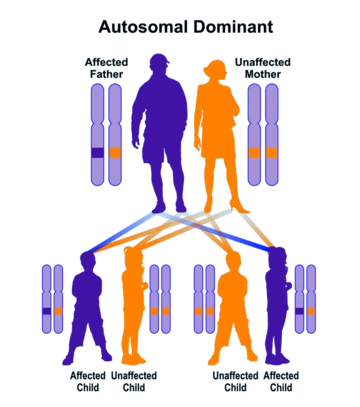
Autosomal dominant inheritance leads to a vertical pattern of transmission