


OMIM ID:
Behcet-Like Familial Autoinflammatory Syndrome
Alternate Names
Defective Genes
Clinical Characteristics
Ocular Features
A minority of reported patients (3 of 14) have had Behcet-like uveitis with retinal vasculitis and chorioretinal lesions. In two of the 3 patients with uveitis the inflammation was anterior but the authors reported significant visual loss.
Systemic Features
Fourteen patients in 6 unrelated families have been reported. Onset usually occurs during the first or second decades of life. Patients usually developed oral and genital ulcers. Other features variably present were polyarthritis, a skin rash and inflammatory disease or ulcerations in the GI tract. Several patients had periodic fevers and hemolytic anemia was present in one. The majority of individuals have been female.
Three patients in a single family had lupus anticoagulant and three others had antinuclear antibodies.
Genetics
Inheritance
Pedigree
Autosomal dominant
Autosomal dominant disorders require only one mutation for the disease to be expressed. Since an affected parent has two chromosomes, only one of which has the mutant gene, parents can expect that half (50%) of their children will receive that one and inherit the disease. It is common for individuals that inherit the mutation, however, to not have evidence of the disease (nonpenetrance).
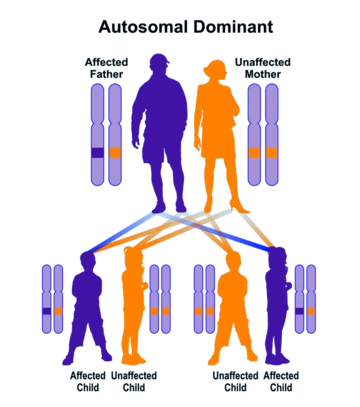
Autosomal dominant inheritance leads to a vertical pattern of transmission